
What real products reveal about texture, scale and design.
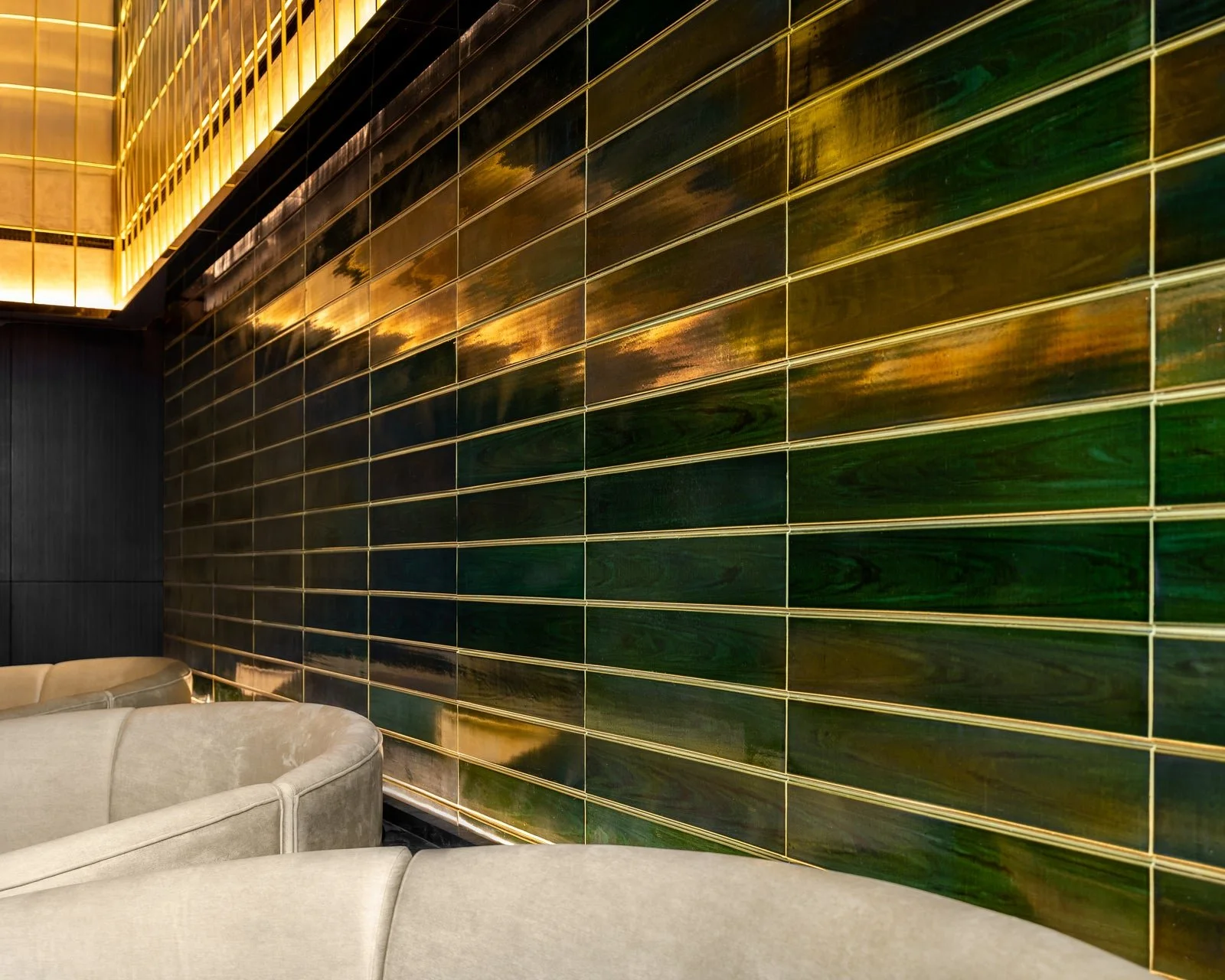
Look at the bands of reflected light across the green glaze. Wall Oribe at Kasumigaseki, Vida Emirates Hills, Dubai. Photo: Mittsu Japanese Tiles. [1]
The closer a ceramic surface comes to eye level, the more it asks of design. We notice how it catches the light, how it turns a corner and how it feels beside timber, metal or fabric. A wall, a counter and a piece of furniture each reveal something different.
That is the opportunity I see as ceramics take a broader role in architecture: a material becomes part of the character of a place. These real installations make the shift easier to see. The photographs show finished spaces; the illustrations explain the details hidden inside the material.
Light gives a surface its character
The green wall above and the black wall below belong to the same hospitality project. One uses reflective glaze; the other uses vertical relief. Their effects are visible before anyone reads a product specification.[1]
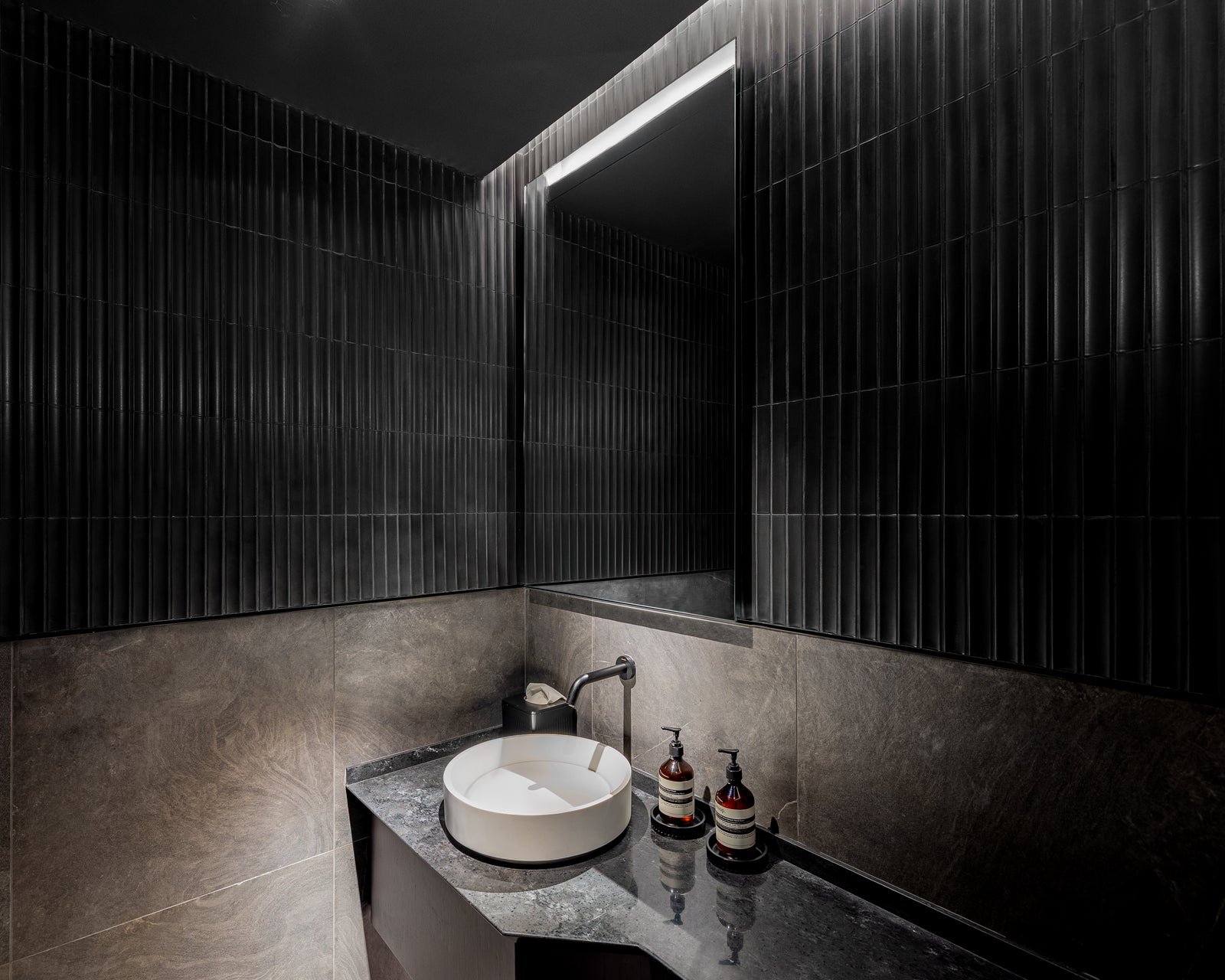
The ridges catch light while the grooves remain dark, giving a black wall depth. Ka-Bu matt black at Kasumigaseki, Vida Emirates Hills, Dubai. Photo: Mittsu Japanese Tiles.[1]
This makes light a design input. A surface should be considered under the lighting planned for the room, with its intended grout and surrounding materials. A small sample viewed flat on a desk tells only part of the story.
New decoration technologies add another possibility: selected systems can coordinate the graphic pattern with physical relief.[2] A vein can have a corresponding contour; a mineral interpretation can combine colour, depth and a controlled sheen. The creative task is to make those decisions belong together.
Sintered stone: understand the material first
Sintered stone is generally made by compacting mineral powders and firing them at high temperature into a dense manufactured surface. Porcelain also undergoes sintering, so the category name needs to be read alongside the actual product construction and tested properties.[3, 4]
Three separate choices often get bundled into one conversation: how the material is made, how large the piece is, and where its decoration appears.
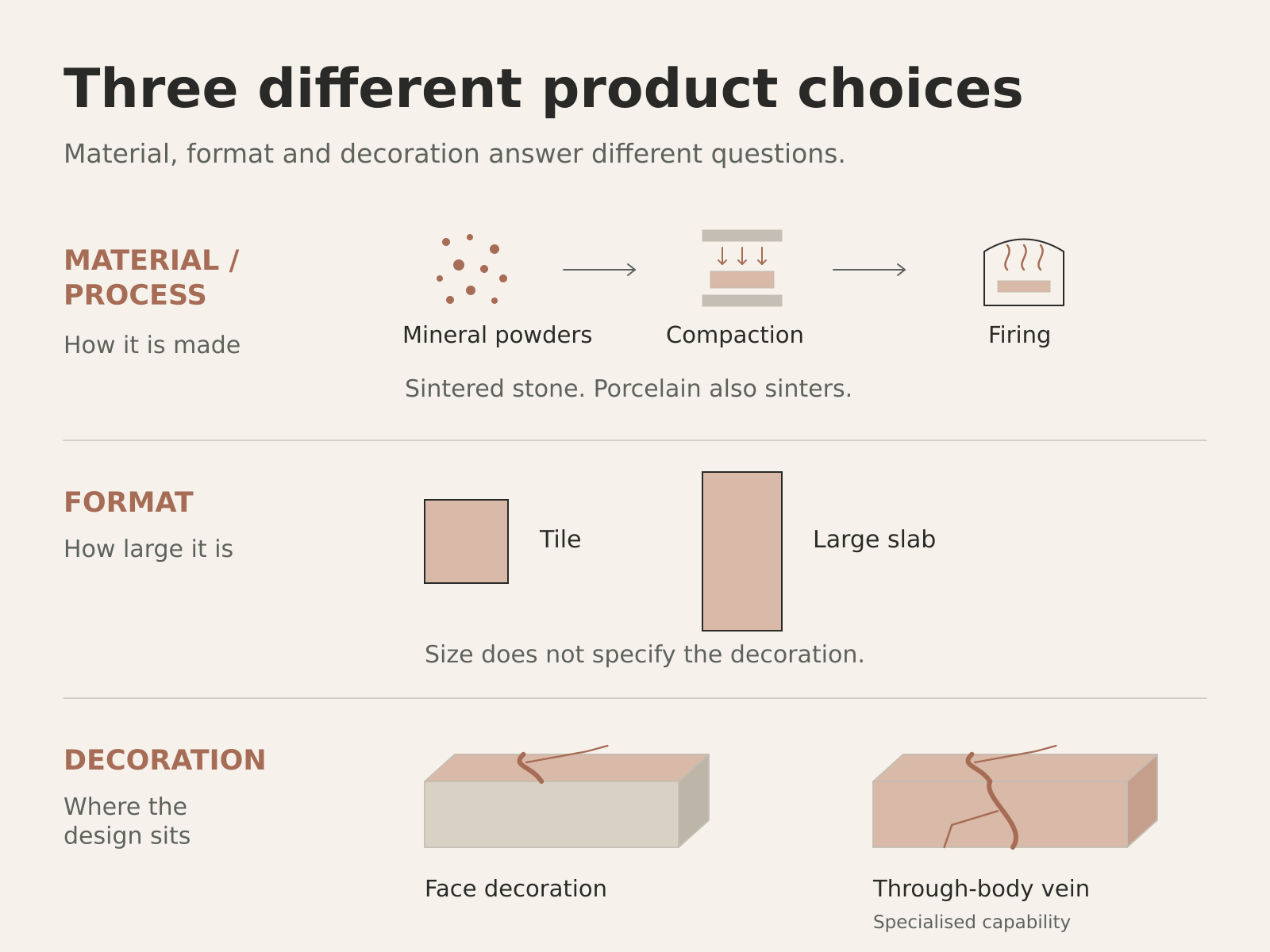
Why does this matter for big slabs? A broad, uninterrupted surface gives a pattern room to unfold and can reduce visible joints. Manufacturing control must deliver consistency and flatness across that area. Thickness, backing, fabrication and support then have to suit the intended use.[9]
The attraction is a combination of material control and visual scale. The word “sintered” by itself does not tell an architect whether a particular panel suits a countertop, a wall or an exterior assembly.
Design the whole room
In Baño Hollywood, a built exhibition installation at Casa Decor 2023, sintered stone appears in several roles. The organiser identifies it in the patterned flooring, dressing tables, shower walls and the insert in the central wooden table.[5]
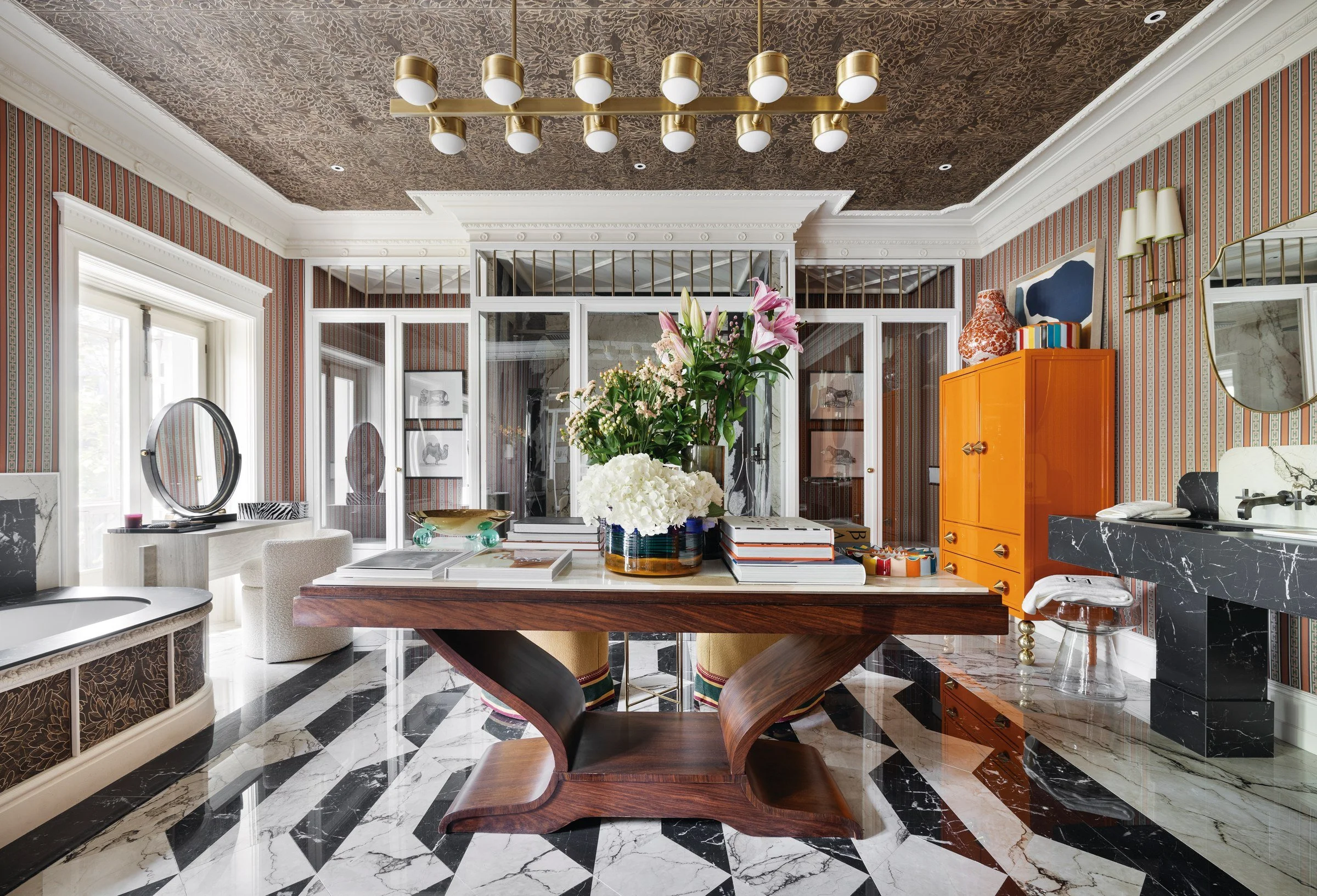
Follow the geometric floor and the pale insert in the central wooden table: both use sintered stone. Baño Hollywood by Jean Porsche, Casa Decor 2023. Photography: Nacho Uribe Salazar. Supplied through the Neolith / Casa Decor press kit. Other visible finishes include separate wall-coverings, timber and furnishings. [5]
Look at the composition: the floor’s deliberate joints create a geometric pattern, while the table insert gives the material another scale and purpose. It is one example of a broader design conversation across architecture and furniture.
Large slabs extend that conversation where long veins, generous proportions or fewer interruptions serve the design. Collections can also connect smooth, textured and differently sized surfaces through a shared palette. The architect’s job is to choose the relationships that make the space work.
The edge tells another story
A countertop or table exposes parts of the material that a wall may conceal. Cut edges, corners and openings become visible features.
Selected through-body technologies carry decoration into the thickness of a slab; some coordinate that internal pattern with the surface graphic.[6, 7] This can help a visible edge share the character of the face.
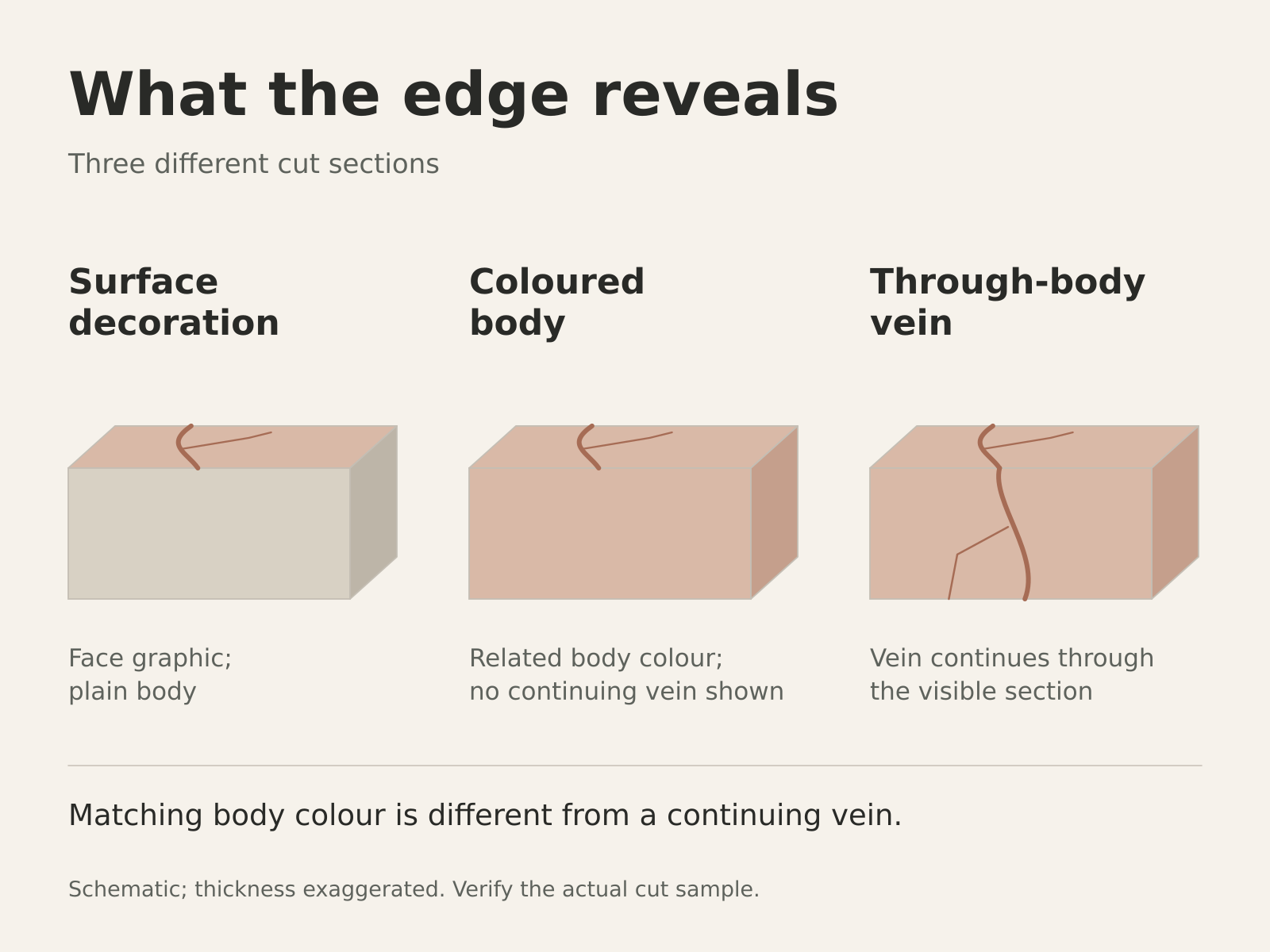
A coloured body is a separate characteristic from a vein continuing through it. The useful test is a fabricated sample: a cut edge, a corner and a representative opening. Through-body appearance is a design capability; strength and application suitability still require their own evidence.
Small details connect design and engineering
The curved joinery at Bisque Golf in Amsterdam shows another way to use ceramic architecturally. Narrow tiles follow the form, while pale joints create a regular rhythm.[8]
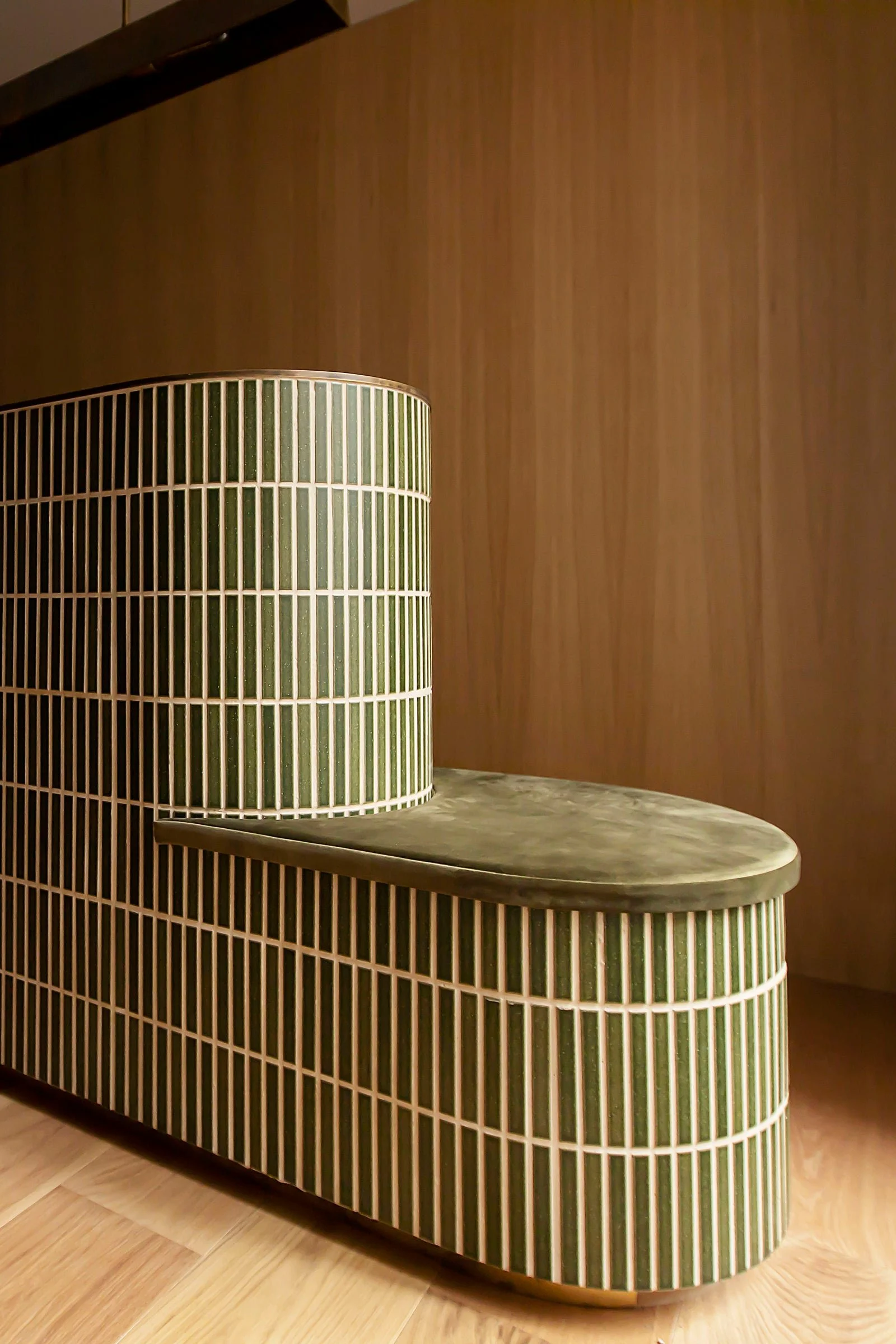
Narrow tiles follow the curved joinery, making the joints part of its rhythm. Kaji Border Vintage Green, Bisque Golf, Amsterdam. Design: Barde + vanVoltt. Photo: Mittsu Japanese Tiles. [8]
This detail depends on more than the tile’s colour. Unit size, curve radius, joint spacing and the junction with the top all contribute to the result. It is a useful reminder that design can work through many formats.
As surfaces enter more demanding applications, creative teams need materials scientists, engineers, architects and fabricators alongside them. Their shared task is to make the intended appearance repeatable, buildable and appropriate for its setting. Large panels also require suitable handling, substrates, joints and installation methods.[9]
Where the opportunity moves
My view is that the commercial opportunity follows this broader role. Walls, kitchen and bathroom surfaces, furniture and architectural projects bring more design decisions into reach. Winning those decisions requires a recognisable collection, convincing samples and practical specification support.
There is something familiar here from fashion: creative direction gives separate pieces a shared identity, while collaborations introduce fresh perspectives. In ceramics, that identity must also survive cutting, fabrication and installation.
Efficient production remains essential. A stronger design and materials capability adds further reasons for an architect or customer to choose a surface. The question for the industry is how well it can connect the factory’s capabilities with the places people want to create.
Related reading: Beyond the Floor: The New Business of Ceramic Surfaces.
1. Kasumigaseki: Wall Oribe and Ka-Bu in an actual hospitality interior
2. Coordinating ceramic graphics and physical texture
3. Sintered-stone manufacturing and mineral preparation
4. Research on sintering in porcelain and porcelain stoneware
5. Baño Hollywood: product applications at Casa Decor 2023
6. Selected ceramic products with design through their thickness
7. Coordinating body veining with surface decoration
8. Bisque Golf: Kaji Border Vintage Green and curved joinery
9. Product and installation standards for ceramic tiles and slabs