Business & Industry
Manufacturing · Supply Chains · Energy · Governance
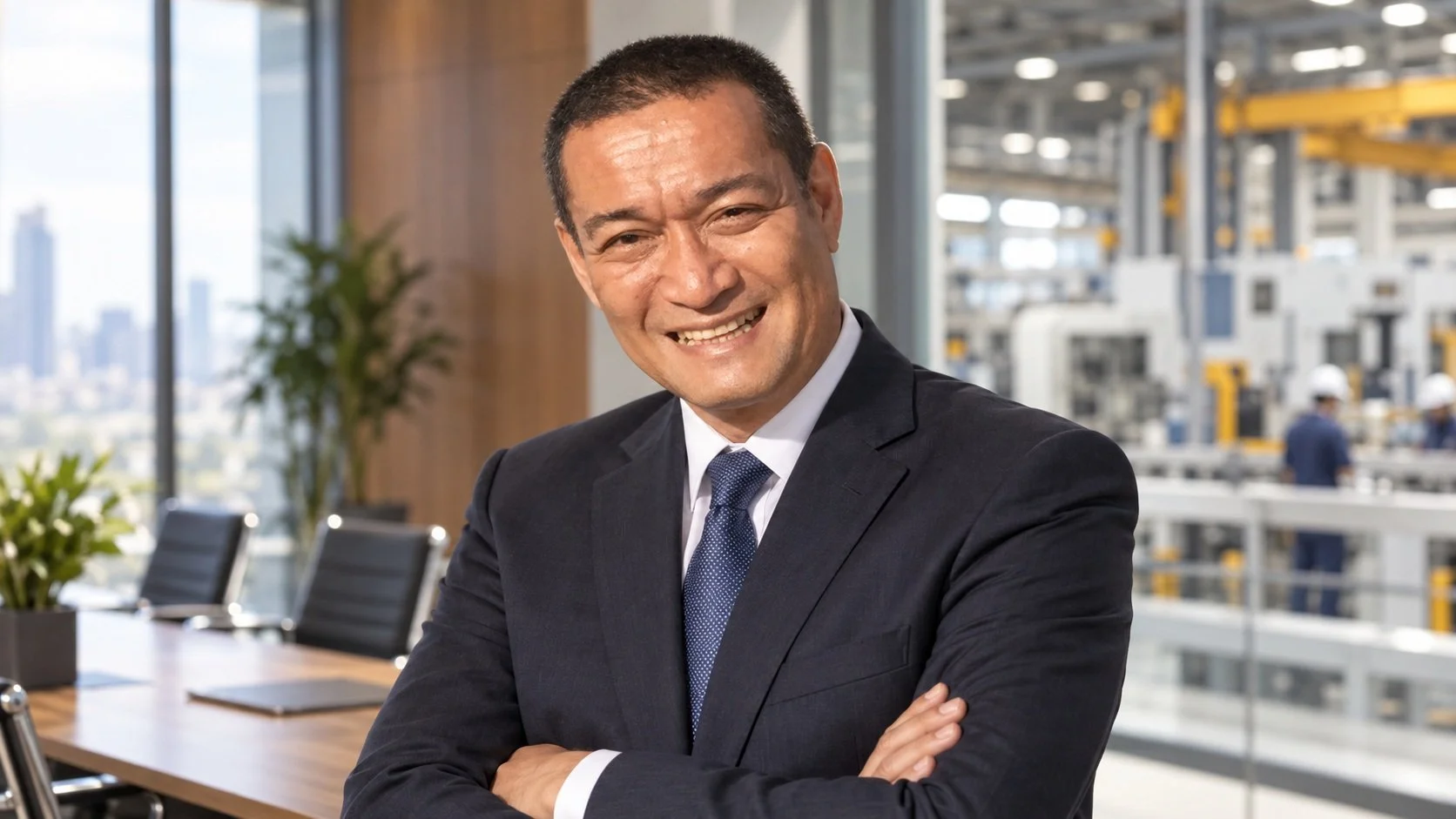
Building Businesses That Can Perform Through Change
Desra Ghazfan (Desra Firza Ghazfan) is President Director of PT Intikeramik Alamasri Industri Tbk (IDX: IKAI), an Indonesian listed group with businesses in ceramic manufacturing, hospitality and property development.
View his Profile at Intikeramik →
His business perspective connects industrial operations with technology, supply-chain resilience, disciplined investment and corporate governance. The emphasis is on building businesses that can deliver consistent quality, serve customers reliably and preserve financial strength as conditions change.
The central principle is straightforward: growth should be supported by stronger operating capability—not simply larger assets, higher production volumes or more ambitious plans.
Read Professional Biography →
Corporate Leadership at Intikeramik
Intikeramik’s manufacturing business includes PT Internusa Keramik Alamasri, the producer associated with the Essenza porcelain-tile brand. The group’s wider activities also encompass hospitality and property development.
Leading a diversified business calls for both a common management discipline and a clear understanding of the economics of each operation. Manufacturing, hospitality and property-related investment should not be assessed through an identical set of performance measures.
The shared priorities should nevertheless be clear: productive assets, reliable information, accountable management, customer value and disciplined use of capital.
For current board composition, corporate developments and financial information, readers should refer to Intikeramik’s official disclosures. This personal website is not a substitute for the company’s investor-information channels.
View Official Intikeramik Information →
Manufacturing Competitiveness
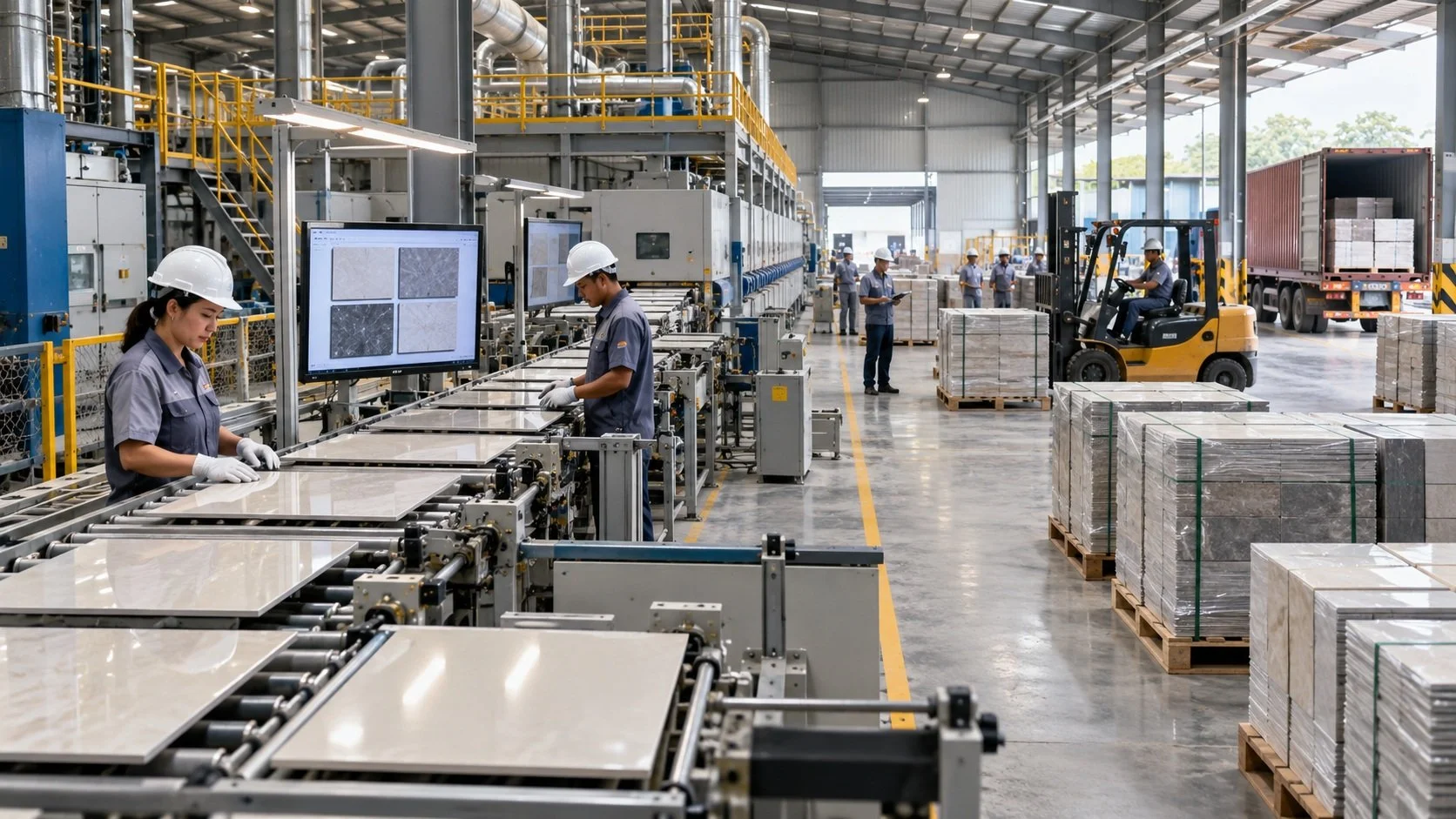
A manufacturer’s performance should not be judged by installed capacity alone. The more useful question is how consistently that capacity produces saleable output at an acceptable margin.
The operating agenda should connect product quality, equipment availability, energy consumption, raw-material consistency, delivery reliability and working capital. Improvements in one area should not be purchased at the expense of another.
Reducing a material’s invoice price, for example, is not a genuine saving when the change produces more rejects or requires additional processing. Increasing output is not an improvement when the additional inventory cannot be sold profitably.
The objective is a manufacturing system that converts resources into products customers value—and converts those sales into cash.
Competitiveness is the ability to deliver quality, reliability and economic value repeatedly, not only under favourable conditions.
Supply-Chain Resilience
Desra’s published analysis of ceramic manufacturing examines the relationship between ball clay, feldspar, natural gas, logistics and investment decisions. It considers raw materials through their technical performance and delivered economics rather than purchase price alone.
A resilient supply chain should combine qualified alternatives, appropriate stock buffers, supplier visibility and practical contingency plans. Different dependencies require different responses: mineral inventories, critical spare parts and continuous energy supply cannot be managed through one blanket policy.
The management objective is to protect production continuity without losing control of product quality or liquidity.
This also means examining the complete route from source to factory. Access to a resource is of limited use when the material cannot be delivered consistently, processed economically or substituted within the approved production recipe.
Read the Ceramic Supply-Chain Analysis →
Energy Security and Industrial Economics
Energy should be managed through three separate questions: Is the supply dependable? Is the price commercially workable? How efficiently is the energy converted into saleable output?
For kiln-based manufacturing, management should distinguish contracted entitlement from actual delivery and assess interruptions alongside price volatility. A favourable tariff is not a complete operating solution without dependable volume and a credible contingency plan.
At factory level, the emphasis should be on energy per first-quality saleable square metre, supported by appropriate kiln loading, maintenance, process control and technically qualified body formulations.
Energy planning also belongs in capital allocation. Efficiency projects, raw-material changes and capacity expansion should be tested against more than one energy-price and availability scenario.
Corporate Transformation and Governance
Business transformation should produce observable changes in how decisions are made, responsibilities are assigned and performance is measured.
A practical transformation agenda begins with a clear operating baseline: the main sources of margin loss, unreliable delivery, excess inventory, weak cash conversion and avoidable risk. Priorities should follow the economics of those problems rather than the visibility of individual projects.
Governance is part of that operating discipline. Clear approval authority, dependable reporting, procurement controls, reconciliations and effective escalation should help management identify problems before they become larger losses.
Accountability should be fair as well as demanding. Employees who identify material risks, improve processes or protect company resources should receive appropriate recognition. People should be able to raise legitimate concerns without being discouraged by hierarchy.
The aim is a business where decisions can be explained, performance can be verified and improvement does not depend on constant intervention by a single individual.
Investment and Selective Vertical Integration
Investment should strengthen the business, not merely increase the size of its asset base.
For an industrial company, upstream ownership can be one way to improve supply security. It should be evaluated alongside long-term offtake, supplier partnerships, joint investment and qualified alternative sourcing.
The investment case must address technical suitability, resource quality, logistics, operating capability, sustaining capital and the risks that ownership brings inside the company. It should also identify what can be achieved without an acquisition.
A phased commitment can preserve flexibility: qualification first, commercial validation second, and larger capital commitments only when the evidence supports them.
The governing question is not simply whether an asset is strategically attractive. It is whether the company can operate it effectively and earn an appropriate return after considering the full cost, risk and capital requirement.
Hospitality and Asset Productivity
Hospitality is another part of Intikeramik’s business portfolio.
The management perspective here combines guest experience with asset productivity. Occupancy should be considered alongside room-rate quality, operating cost, maintenance, distribution expense and cash generation—not treated as a sufficient measure of success on its own.
Cost discipline should protect the service proposition rather than undermine it. Efficiency that damages reliability, cleanliness or the guest experience can weaken the business it is intended to improve.
Sustainability initiatives should likewise be evaluated through measurable operational outcomes: energy and water consumption, waste reduction, equipment performance and lifecycle cost.
Across manufacturing and hospitality, the underlying question is similar: how can physical assets serve customers better while using resources and capital more productively?
Technology as an Operating Capability
Desra’s writing on industrial transformation places technology within the wider task of improving business operations. It discusses applications in planning, quality, maintenance, resource efficiency and supply-chain coordination.
The starting point should be a measurable business problem—not the purchase of an AI platform or a dashboard without a decision-making purpose.
Useful technology should help the organization recognize problems earlier, coordinate action and learn from results. That requires reliable data, practical integration, trained employees and clear responsibility for acting on the information.
The test is straightforward: does the investment improve quality, delivery, cost, cash flow or risk management—and can the organization sustain that improvement?
Explore Technology & AI →
Building Long-Term Industrial Capability
The wider ambition should be to develop businesses that become more capable over time.
That means strengthening engineering and maintenance skills, developing reliable suppliers, improving product development and building managers who understand both operations and finance.
Investment in equipment should be accompanied by investment in the ability to operate, maintain and improve it. Partnerships should create learning as well as access. Expansion should leave the organization more resilient, not simply more complex.
For Indonesia, a useful measure of industrial progress is therefore not only how much capacity is built, but what domestic companies and people become capable of delivering consistently.
Selected Business & Industry Insights


Media and Interview Inquiries
Journalists, researchers and conference organizers seeking the perspective of a president director of an IDX-listed company with manufacturing operations may submit an interview inquiry to Desra Ghazfan.
Topics include ceramic manufacturing, supply-chain resilience, raw-material sourcing, industrial energy, operational transformation, hospitality and corporate governance. Please include the proposed subject, publication or organization, interview format and deadline.
Interview arrangements are subject to availability. Personal industry commentary is distinct from official company announcements.
Request an Interview →
View Media and Institutional References →
Views expressed on this page are personal unless otherwise stated. Current company information should be verified through official corporate and regulatory disclosures. This page does not announce or confirm any specific investment or transaction.