Aviation
Aerospace · Technology · Investment · Indonesia
Aviation has formed a significant part of Desra Ghazfan’s professional background and reflects many of the themes that have shaped his wider career: technology, engineering, infrastructure, investment, operational discipline and long-term industrial capability.
His aviation experience has included senior involvement with PT Regio Aviasi Industri (RAI), the company responsible for development of the R80 regional aircraft program. His official Intikeramik biography identifies him as a former Chief Investment Officer of PT Regio Aviasi Industri, while independent media from the R80 period also document his involvement in financing, funding strategy and program development. View his profile page at Intikeramik →
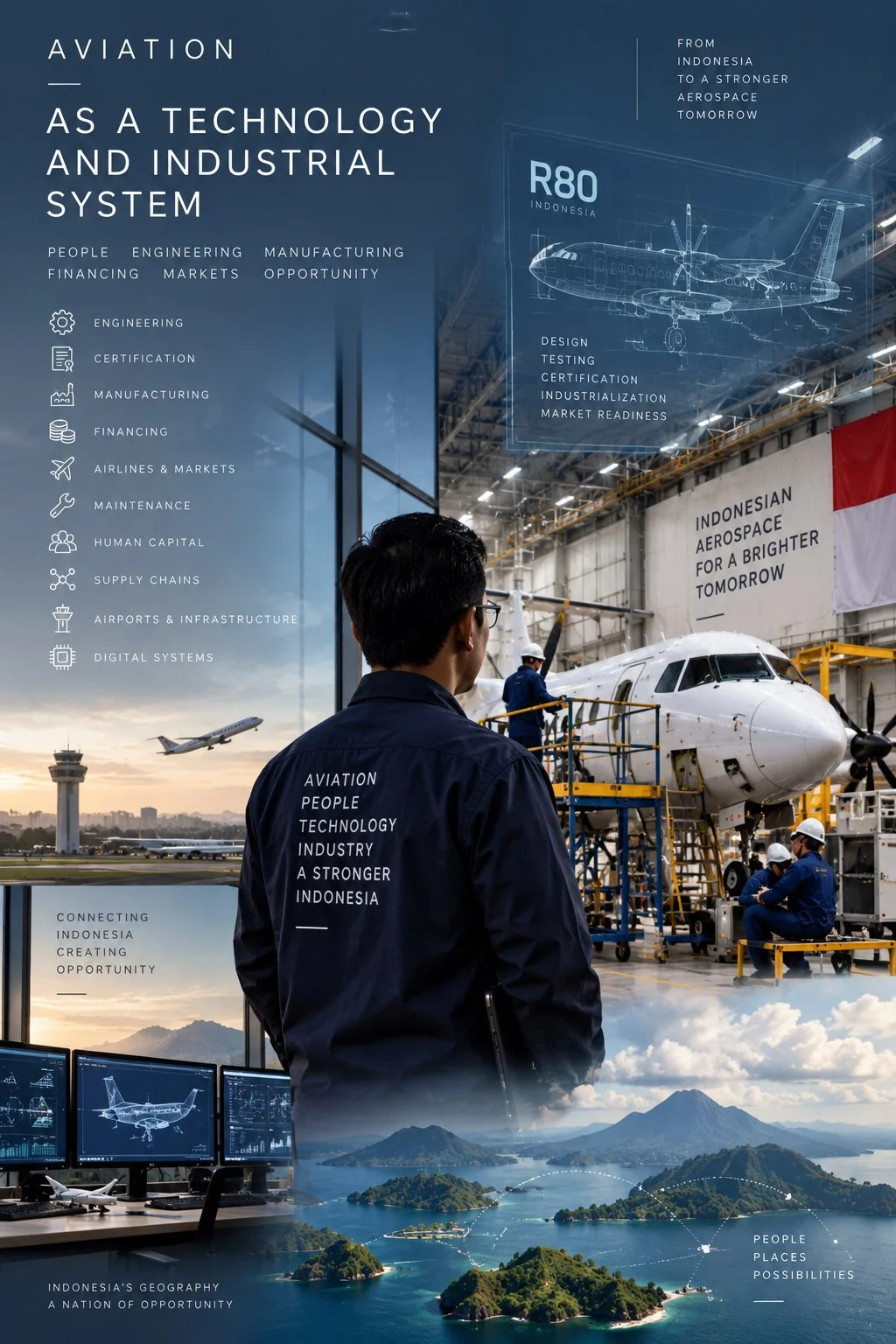
Aviation is therefore not treated here simply as transportation. It is viewed as a complex industrial ecosystem linking:
engineering;
certification;
manufacturing;
supply chains;
financing;
airlines;
airports;
maintenance;
digital systems;
human capital; and
national industrial capability.
Aviation as a Technology and Industrial System
The R80 Program
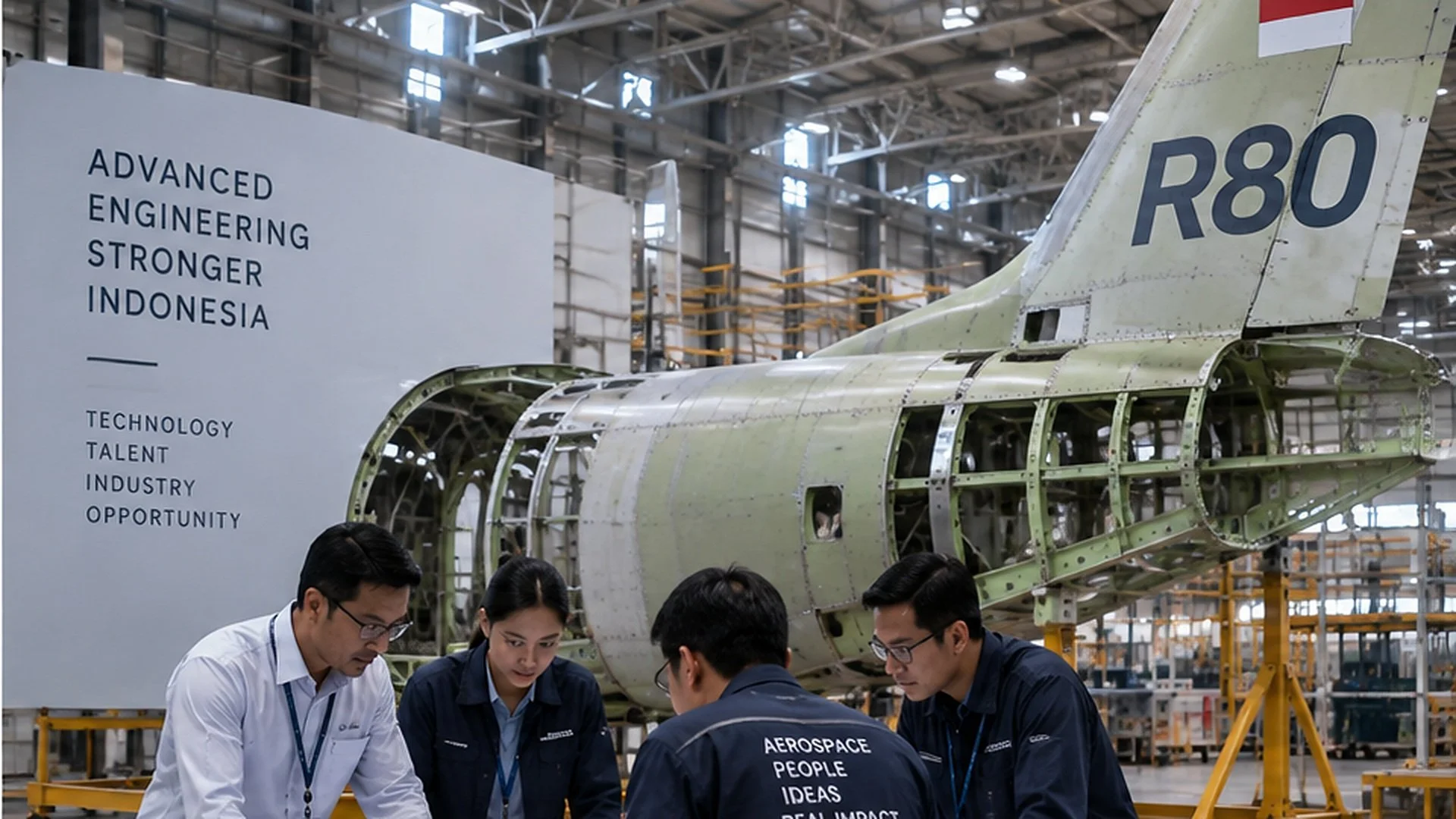
The R80 was conceived as an Indonesian regional turboprop aircraft intended to serve short- and medium-range markets.
During the program’s development, Desra Ghazfan was involved in financial and investment aspects of the project. ANTARA reported in 2017 that, in his role as Deputy Director of Finance for Funding Affairs at PT RAI, he discussed an estimated development requirement of approximately US$1.5 billion and the intended domestic financing component. Read Original News Article →
ANTARA also reported his comments on the planned first-flight, certification and delivery schedule then envisioned for the R80, as well as letters of interest from Indonesian airlines. Read Original News Article →
The significance of the project went beyond one aircraft.
The R80 represented a broader question for Indonesia:
How can a country with an established aviation heritage develop the engineering, financing, certification and supplier capabilities required to compete in modern aerospace?
That question remains relevant today.
Aviation Requires More Than Aircraft Design
Developing an aircraft is one of the most complex industrial undertakings a company or country can attempt.
A viable aviation ecosystem must combine multiple disciplines simultaneously.
Engineering
Aircraft development requires systems integration across aerodynamics, structures, propulsion, avionics, flight controls, software and safety-critical systems.
Certification
An aircraft that performs technically is not yet a commercial aircraft. Certification requires a disciplined process of analysis, testing, documentation and regulatory compliance.
Industrialization
Prototype development must ultimately be converted into repeatable production. That requires supplier qualification, manufacturing quality, tooling, logistics, configuration control and production planning.
Financing
Aircraft programs require substantial capital long before commercial deliveries begin. Development financing, working capital, supplier funding and customer financing must therefore be considered alongside engineering.
Market
The aircraft must solve a real airline problem: route economics, passenger capacity, fuel consumption, maintenance cost, dispatch reliability and lifecycle support.
Aviation becomes economically viable only when these systems work together.
Regional Aviation and Indonesia
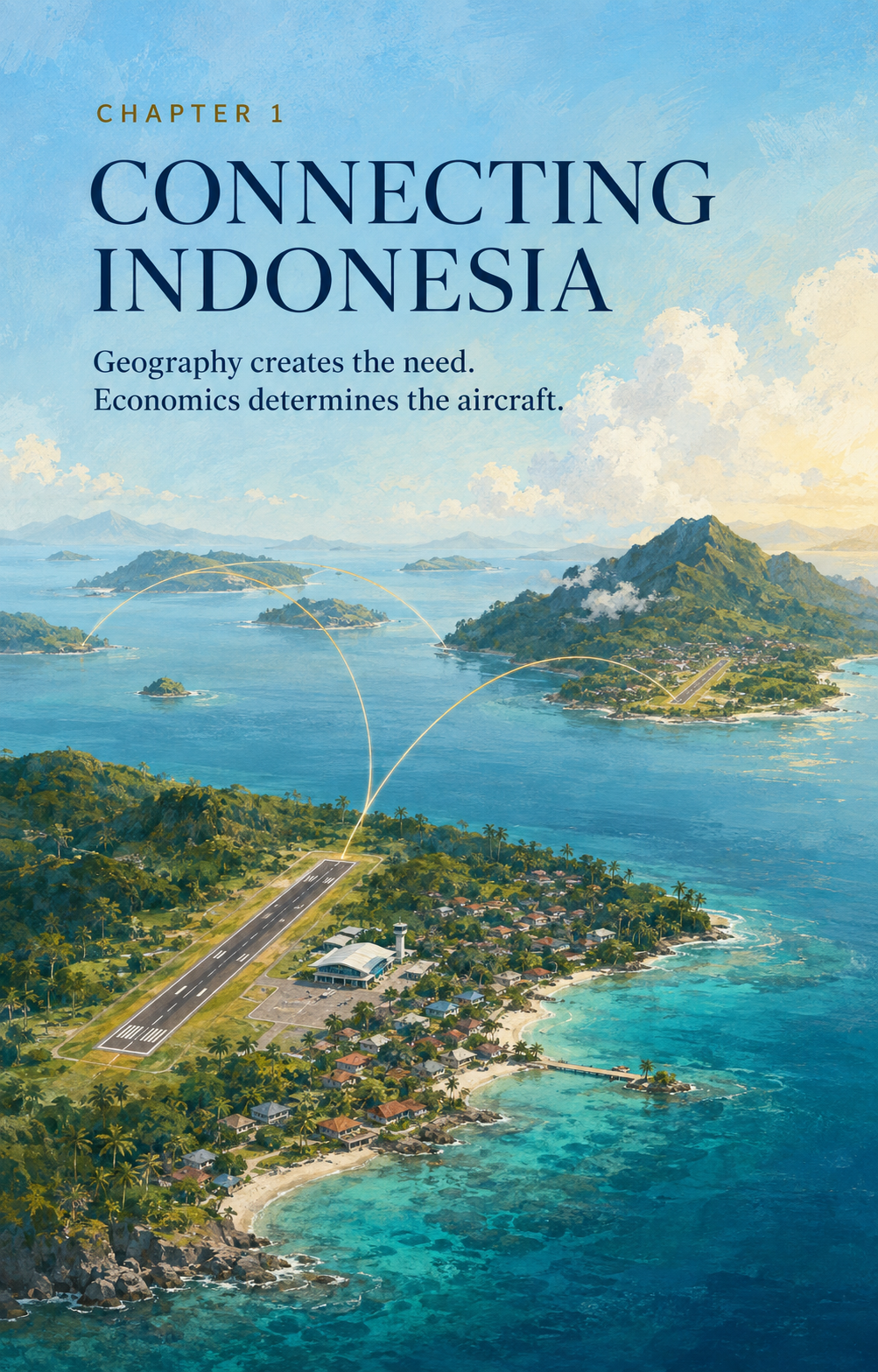
Indonesia’s geography makes regional aviation particularly important.
The country consists of thousands of islands, with major population centers separated by sea and significant variation in airport infrastructure.
This creates demand for aircraft capable of serving:
secondary cities;
regional airports;
shorter runways;
thinner passenger routes;
inter-island travel;
feeder networks; and
regional economic centers.
For many routes, turboprop aircraft can offer attractive economics because they are optimized for shorter sectors where jet speed provides less economic advantage.
The strategic opportunity is therefore not only to operate regional aircraft, but to understand where Indonesia can participate in the surrounding value chain:
engineering;
maintenance;
parts;
avionics integration;
training;
digital systems;
airport technology;
leasing;
financing;
and selected manufacturing capability.
Aviation and National Industrial Capability
Aviation has historically played an important role in Indonesia’s technological development.
An aerospace program creates demand for capabilities that can transfer into other sectors:
precision manufacturing;
systems engineering;
electronics;
materials;
software;
testing;
quality systems;
certification discipline;
project management; and
advanced supply-chain management.
That is why aerospace capability can have an industrial effect beyond the number of aircraft delivered.
The relevant national question is not whether Indonesia should attempt to manufacture every component domestically.
A more practical question is:
Which aviation capabilities should Indonesia own, understand and continue developing because they create long-term economic and strategic value?
The answer is likely to involve selective specialization rather than complete self-sufficiency.
Financing Complex Industrial Projects
Aircraft development also illustrates a lesson that applies across other capital-intensive industries.
Large projects fail when financing is considered after the technical program has already been defined.
Capital strategy should be integrated from the beginning.
For aviation, this includes:
sponsor equity;
strategic investors;
government support;
export-credit structures;
development finance;
supplier participation;
airline commitments;
leasing;
milestone-based funding; and
long-term working capital.
Aircraft programmes require financing that extends beyond design and prototyping. Certification, production tooling, supplier readiness, customer support and working capital must be funded through a coherent development plan. The investment case should therefore connect technical milestones with funding commitments, commercial demand and the capability to support aircraft throughout their operating lives.
Selected reporting on Desra Ghazfan’s aviation roles, financing activity and international outreach is available in Media & Institutional References.
Selected Insights


About Desra Ghazfan
Desra Ghazfan (Desra Firza Ghazfan) is an Indonesian business and technology executive whose professional experience spans technology, telecommunications, aviation, energy, mining and industry. He currently serves as President Director of PT Intikeramik Alamasri Industri Tbk (IDX: IKAI).