Indonesia's Green AI Opportunity: Building the Infrastructure Behind the Intelligence
AI may look like software, but its real foundation is physical. Indonesia can build the energy, data centers, networks and talent behind sustainable intelligence.
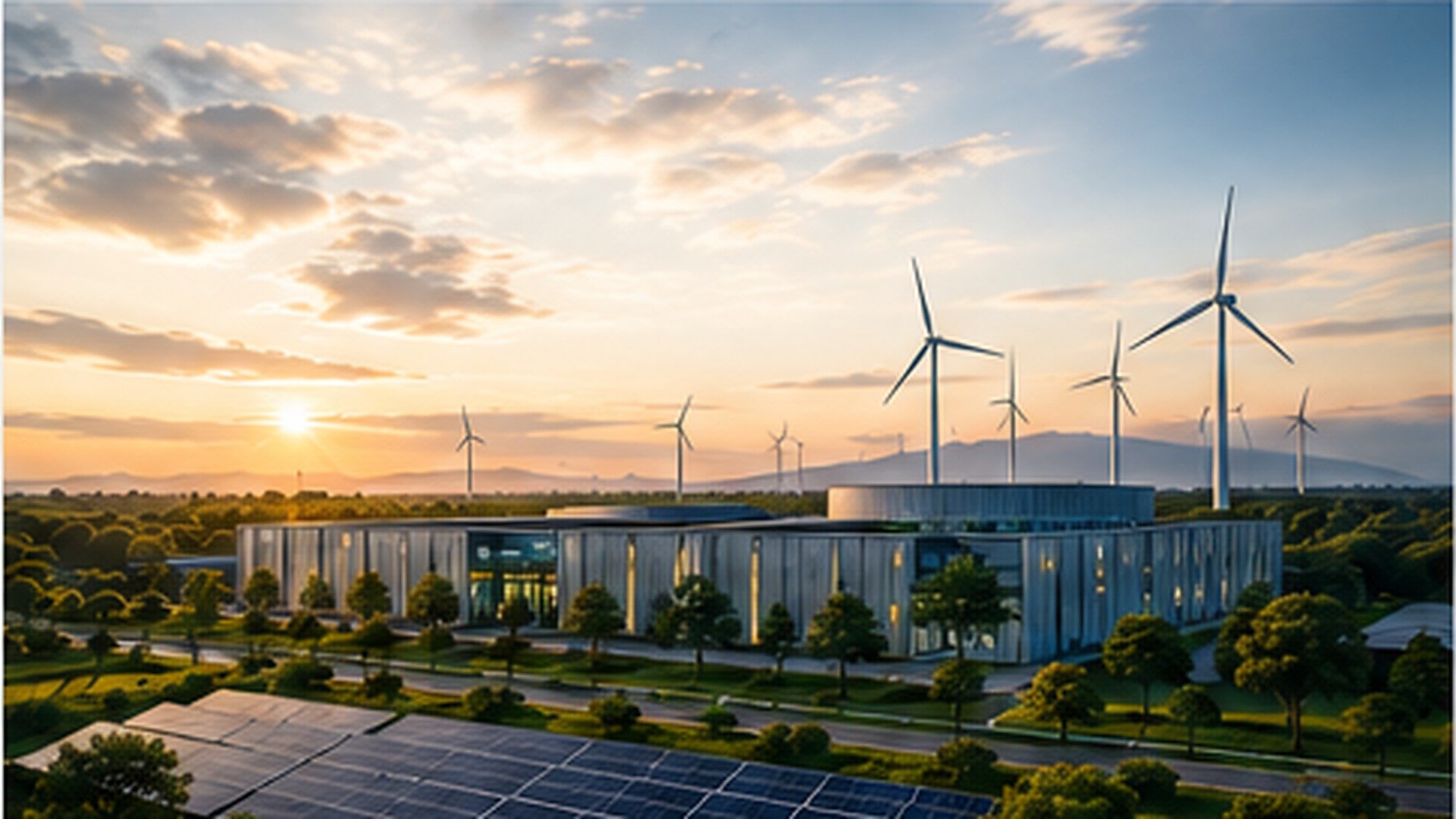
Artificial intelligence is often described as if it were weightless: an algorithm in the cloud, a model behind an application, or an assistant responding instantly to a request. That description is incomplete.
Every prompt, recommendation, forecast and automated decision ultimately depends on physical systems. AI requires computing equipment, data centers, reliable electricity, cooling, fiber networks, cybersecurity, skilled operators and institutions capable of governing data and risk. The intelligence may appear on a screen, but the capability behind it is industrial.
This matters because the next phase of AI competition will not be decided only by who develops the best application. It will also be decided by who can provide dependable, affordable and increasingly low-carbon infrastructure at scale.
The International Energy Agency's 2026 update projects that global data-center electricity consumption could rise from roughly 485 terawatt-hours in 2025 to about 950 terawatt-hours by 2030. AI-focused data centers are expected to grow even faster. That is not simply a technology trend; it is an energy, infrastructure and investment challenge.
For Indonesia, the opportunity is clear. We can remain primarily a market for AI services developed and operated elsewhere, or we can build a larger share of the physical and human capability that makes AI possible. The better strategy is not isolation or technological self-sufficiency. It is selective capability-building: developing the layers where Indonesia can create durable economic value, resilience and strategic choice.
Green AI is an industrial system, not a marketing label
"Green AI" is sometimes reduced to the purchase of renewable-energy certificates or a claim that a data center uses efficient equipment. A credible green AI strategy must be more demanding.
It should consider at least five dimensions.
First, electricity. AI infrastructure needs power that is available around the clock, competitively priced and increasingly low in carbon intensity. A facility that is efficient but dependent on a constrained or high-emission grid is not a complete solution.
Second, computing efficiency. The same workload can consume very different amounts of energy depending on processor selection, software design, utilization, model size and scheduling. Green AI therefore begins with avoiding unnecessary computation before deciding how to supply the remaining demand.
Third, cooling and water. High-density computing produces substantial heat. In a tropical country, cooling design, water availability and site selection become central engineering decisions rather than secondary building services.
Fourth, infrastructure utilization. Underused servers and oversized facilities waste capital and energy. Shared computing, flexible workloads and better capacity planning can improve both economics and environmental performance.
Fifth, lifecycle responsibility. Equipment procurement, construction materials, battery systems, electronic waste and replacement cycles all contribute to the environmental footprint.
A genuine green AI ecosystem therefore connects software choices with facility design, power systems, networks, operations and regulation.
“The strategic question is not whether Indonesia will use AI. It is how much of the infrastructure, capability and value behind AI Indonesia will build.”
Indonesia's strategic opening
Indonesia has several advantages that make this opportunity worth pursuing.
The country has a large domestic market, growing demand for digital services, a strategic location within Southeast Asia and significant renewable-energy resources. Indonesia's archipelagic geography also creates a natural requirement for resilient distributed infrastructure rather than dependence on a single location.
The national electricity plan provides an important signal. Indonesia's RUPTL 2025-2034 plans 69.5 gigawatts of additional power-generation capacity, with 76 percent allocated to renewable energy and storage. Implementation will determine the outcome, but the direction is relevant: digital infrastructure and energy planning can increasingly reinforce one another.
Indonesia is also developing a national AI roadmap and ethics framework. This creates an opportunity to treat AI policy as more than software adoption. Energy, data centers, connectivity, talent, cybersecurity and industrial use cases should be addressed as one connected agenda.
The advantages, however, are not automatic. Data-center investment can create limited domestic value if equipment, engineering, software, operations and specialist services are almost entirely imported. Clean-energy potential can remain theoretical if transmission capacity, permitting, land, grid connections and project financing do not align with demand. Connectivity can still be fragile if routes lack redundancy or too much capacity is concentrated in a small number of locations.
The objective should therefore be to build an ecosystem, not simply attract buildings.
The six layers behind sustainable intelligence
A useful way to think about Green AI is as a six-layer infrastructure stack.
1. Reliable and progressively cleaner power
AI workloads need stable electricity. Renewable generation must be combined with transmission, storage, flexible generation, demand management and credible backup arrangements.
The strongest locations will be those where data-center operators and energy providers can plan together. Long-term power contracts, additional renewable capacity, battery storage and carbon-aware workload scheduling can reduce both cost volatility and emissions.
2. Efficient, resilient data centers
Indonesia should compete on operational quality rather than only land and tax incentives. Important capabilities include high-density electrical systems, advanced cooling, water management, fire protection, physical security, energy monitoring and disaster resilience.
Efficiency standards should be performance-based. Power usage effectiveness is useful, but it should not become the only metric. Water use, carbon intensity, availability, utilization and the source of new power supply also matter.
3. Redundant connectivity and interconnection
Compute is valuable only when users and data can reach it reliably. Indonesia needs resilient domestic fiber, international subsea capacity, internet exchange points and multiple physical routes between major economic regions.
Network design should reduce single points of failure. A data center with efficient power but weak connectivity is not strategic infrastructure.
4. Compute and cloud capacity
Indonesia does not need to manufacture every advanced processor to develop meaningful capability. It does need access to scalable computing, trusted cloud environments, workload portability and enough competition to avoid excessive dependence on a single provider.
Public cloud, private cloud, sovereign requirements and specialized AI computing will coexist. The key is interoperability and choice.
5. Trusted data, cybersecurity and governance
AI quality depends on data quality. Economic value depends on whether organizations can use data lawfully, securely and productively.
Indonesia needs practical rules for privacy, cybersecurity, data sharing, sector-specific risk and responsible AI. Governance should protect citizens and critical systems without making legitimate innovation unnecessarily difficult.
6. People and productive applications
Infrastructure becomes capability only when engineers, technicians, researchers, operators and business leaders know how to use it.
The highest value will come from combining infrastructure with real Indonesian use cases: manufacturing, logistics, healthcare, agriculture, financial services, energy, public services, tourism and education. Local-language and sector-specific applications can create value that imported general-purpose systems may not fully address.
Build infrastructure corridors, not isolated facilities
The most effective model may be to develop integrated AI-infrastructure corridors where power, fiber, land, water, logistics, skills and industrial demand are planned together.
These corridors do not have to be identical. One location may specialize in large-scale compute supported by renewable energy. Another may focus on low-latency services close to major users. A third may serve industrial estates, ports or regional cities through edge computing and resilient cloud capacity.
The corridor approach has four advantages.
It reduces the risk that data centers are built before the supporting grid and network capacity is ready.
It creates a market for local engineering, maintenance, cooling, power systems, cybersecurity and professional services.
It supports clustering between universities, technology firms, energy providers and industrial users.
And it allows environmental limits - particularly water, land and grid congestion - to be addressed at system level rather than project by project.
A practical agenda for Indonesia
A credible Green AI strategy should convert broad ambition into a sequence of investable actions.
Integrate digital and energy planning
Large computing projects should be considered in national and regional power planning. Grid connections, transmission upgrades, renewable projects and storage should be assessed alongside data-center demand.
Create clear performance standards
Indonesia can define transparent standards for energy efficiency, carbon reporting, water use, resilience and cybersecurity. Clear rules reduce uncertainty and reward serious operators.
Accelerate network redundancy
More routes, landing points, interconnection facilities and domestic exchange capacity will improve reliability and competition. Resilience should be measured, not assumed.
Develop local supplier capability
Data centers require electrical systems, switchgear, cooling, construction, monitoring, security, maintenance and specialist operations. Supplier-development programs can help Indonesian firms meet international standards and capture more value from investment.
Build a technical workforce at scale
Universities, vocational institutions and industry should jointly develop programs for data-center operations, electrical engineering, cooling, cloud architecture, cybersecurity, AI engineering and responsible governance. Short courses alone will not be sufficient; Indonesia needs durable professional pathways.
Use anchor demand intelligently
Government, state-owned enterprises and large private groups can create demand for trusted cloud and AI services. Procurement should reward security, interoperability, performance and local capability rather than local branding without substance.
Measure what matters
Installed megawatts and the number of data centers are not enough. Better indicators include local supplier participation, renewable-energy additionality, technical jobs, uptime, energy and water efficiency, domestic use cases, research activity and exportable services.
What business leaders should ask
For companies considering AI, infrastructure decisions should not be left entirely to the IT department.
Boards and management teams should ask:
What business outcomes justify the computing requirement?
How sensitive are workloads to latency, data location and service interruption?
What is the exposure to electricity prices and capacity constraints?
Can workloads move between providers?
Is the organization dependent on one vendor, one model or one location?
What data can be used safely, and who is accountable for model risk?
What internal skills must remain in-house?
These questions turn AI from a technology purchase into a strategic operating decision.
The opportunity behind the opportunity
AI will create new applications, services and business models. But the deeper opportunity lies in the infrastructure and capability that support them.
If Indonesia builds dependable power, efficient data centers, resilient networks, trusted governance and skilled people as one system, the country can capture more than consumption. It can create high-quality employment, strengthen industrial productivity, attract long-term investment and develop services that can compete across Southeast Asia.
The objective is not to build the largest possible data-center market at any cost. It is to build a productive, resilient and increasingly sustainable AI ecosystem.
That is the infrastructure behind the intelligence - and it may determine how much value Indonesia ultimately captures from the AI era.