Safeguarding at NOC Indonesia from Bahrain to Aichi Nagoya

AI-assisted editorial illustration. Fictional characters, not athletes or officers involved in a specific case. Photo source: NOC Indonesia
Safeguarding must be part of how Indonesian sport builds success. Athletes need a safe environment, room to speak up, and confidence that their concerns will be acted on. NOC Indonesia’s journey from the Asian Youth Games Bahrain 2025 to the Asian Games Aichi-Nagoya 2026 shows concrete steps towards that goal. Allegations of abuse involving climbing and kickboxing athletes reinforce the need to extend protection across the entire athlete development process, throughout the year.
Supporting young athletes in Bahrain
At the Asian Youth Games Bahrain 2025, NOC Indonesia deployed an official Safeguarding Officer to support its delegation at an international multisport event for the first time. Tabitha Charmaine Sumendap, a member of NOC Indonesia’s Sports for All Commission, undertook the assignment. The programme addressed protection from physical, verbal and online abuse, alongside mental health and digital literacy. It was delivered in cooperation with the Olympic Council of Asia and the organising committee. [1]
A dedicated officer has practical value for young athletes. They need someone to approach when they feel uncomfortable, are unsure about appropriate behaviour, or fear speaking to a person who controls their opportunity to compete. This support helps make athlete safety part of delegation management.
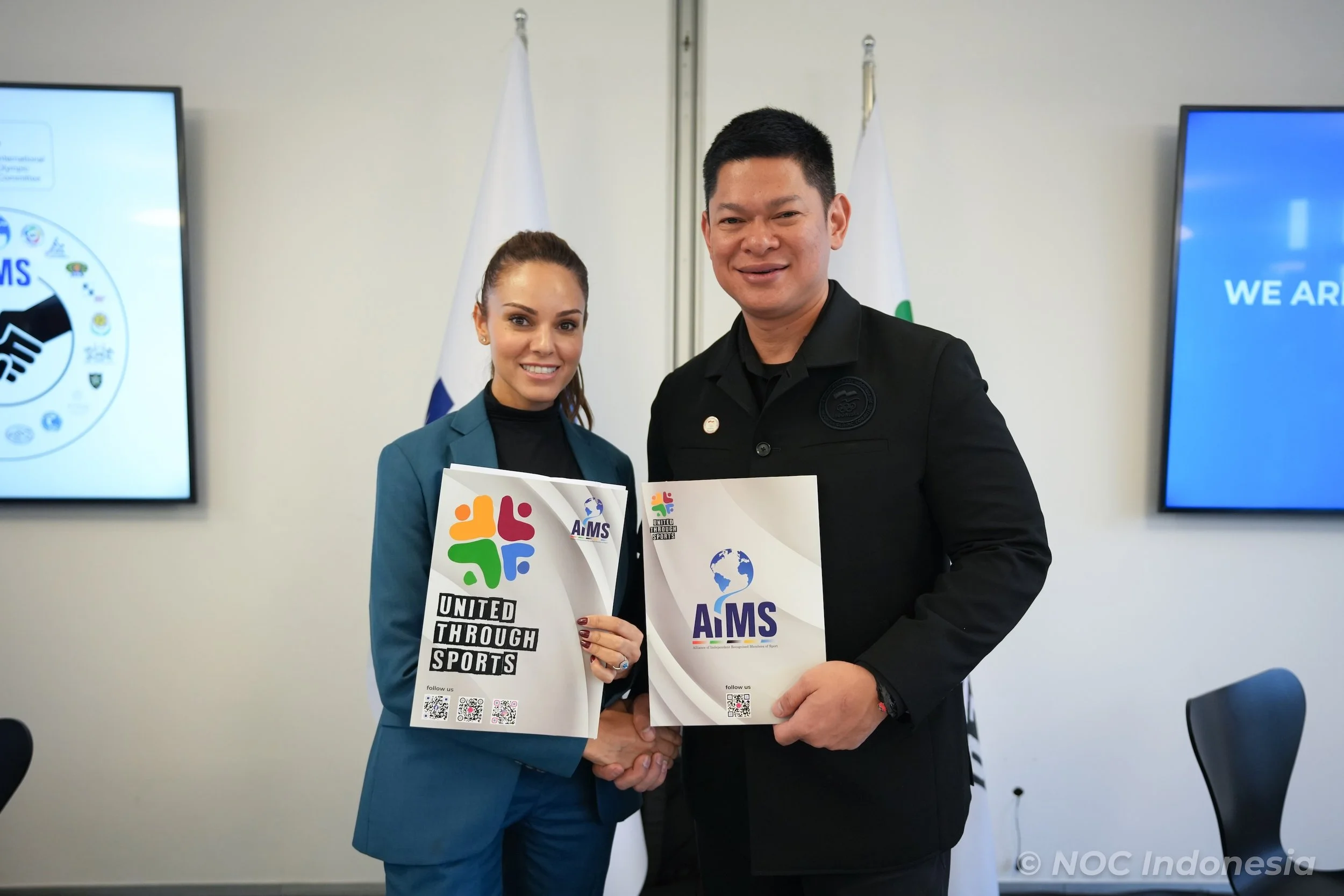
Documentary photograph used in NOC Indonesia’s publication about safeguarding at the Asian Youth Games Bahrain 2025. Credit: NOC Indonesia. It is not a photograph of case handling.
Building capacity at Aichi Nagoya
For the Asian Games Aichi–Nagoya 2026, held from 19 September to 4 October, NOC Indonesia strengthened its provision by assigning two Safeguarding Officers: Tabitha Sumendap and Dr Sophia Hage. According to NOC Indonesia’s statement reported by ANTARA on 15 September 2026, both had completed training and obtained Safeguarding Officer certification from the Safe Sport Commission Singapore. [2]
Their assignment covered education, support, initial guidance, and coordination on safety and welfare concerns involving athletes and officials. NOC Indonesia also announced mobile provision at competition venues and the Athlete Village to improve access. Sophia’s role as a physician connects attention to health with athletes’ need to feel safe, heard and respected. [2]
This development expands the support capacity introduced in Bahrain. Its contribution lies in making trained personnel and assistance more accessible to athletes. Its impact should be assessed through athlete feedback and operational evaluation, including whether athletes know where to seek help and receive an appropriate response.
Lessons from climbing and kickboxing
Allegations of abuse at the national climbing training camp show that protection is also needed in the development of one of Indonesia’s leading sports, including the speed discipline. In its statement of 4 March 2026, the Indonesian Climbing Federation, FPTI, described receiving athletes’ reports, temporarily removing the head coach, establishing a fact-finding team, and updating management arrangements and interaction protocols. It also reported coordination with NOC Indonesia and other relevant bodies. [3]
NOC Indonesia’s role in this case is documented. On 3 March 2026, the Ministry of Youth and Sports reported that NOC Indonesia was monitoring the investigation through its Safeguarding Task Force and had written to national federations to strengthen safeguarding implementation. On 21 August 2026, the ministry reported that the former head coach, identified as HB, had been named a suspect and the case transferred to prosecutors. This procedural status is distinct from a court finding of guilt. [4][5]
The kickboxing case illustrates similar concerns about unequal power. In March 2026, the ministry responded to a female athlete’s disclosure of alleged sexual violence. East Java Police also announced that a suspect had been named in a case involving alleged sexual violence against a female athlete. Criminal proceedings are the responsibility of law enforcement, while sports organisations must continue to provide safety and support for athletes. [6][7]
NOC Indonesia’s response to both cases also addressed the wider system. On 14 March 2026, Tabitha explained that the taskforce was preparing reporting and protection procedures, alongside codes of conduct to be discussed with federations according to each sport’s needs. Stronger cooperation across ministries was part of the plan. This work provides a route for bringing delegation experience into federation governance. The next challenge is ensuring that procedures are implemented and understood by athletes. [8]
Protection throughout the year
Both cases raise a central question: how can athletes seek help when the person they are concerned about has power over their training, selection or career? Reporting channels must allow athletes to bypass that person. Identities and sensitive information need protection, and athletes must be safe from retaliation after speaking up.
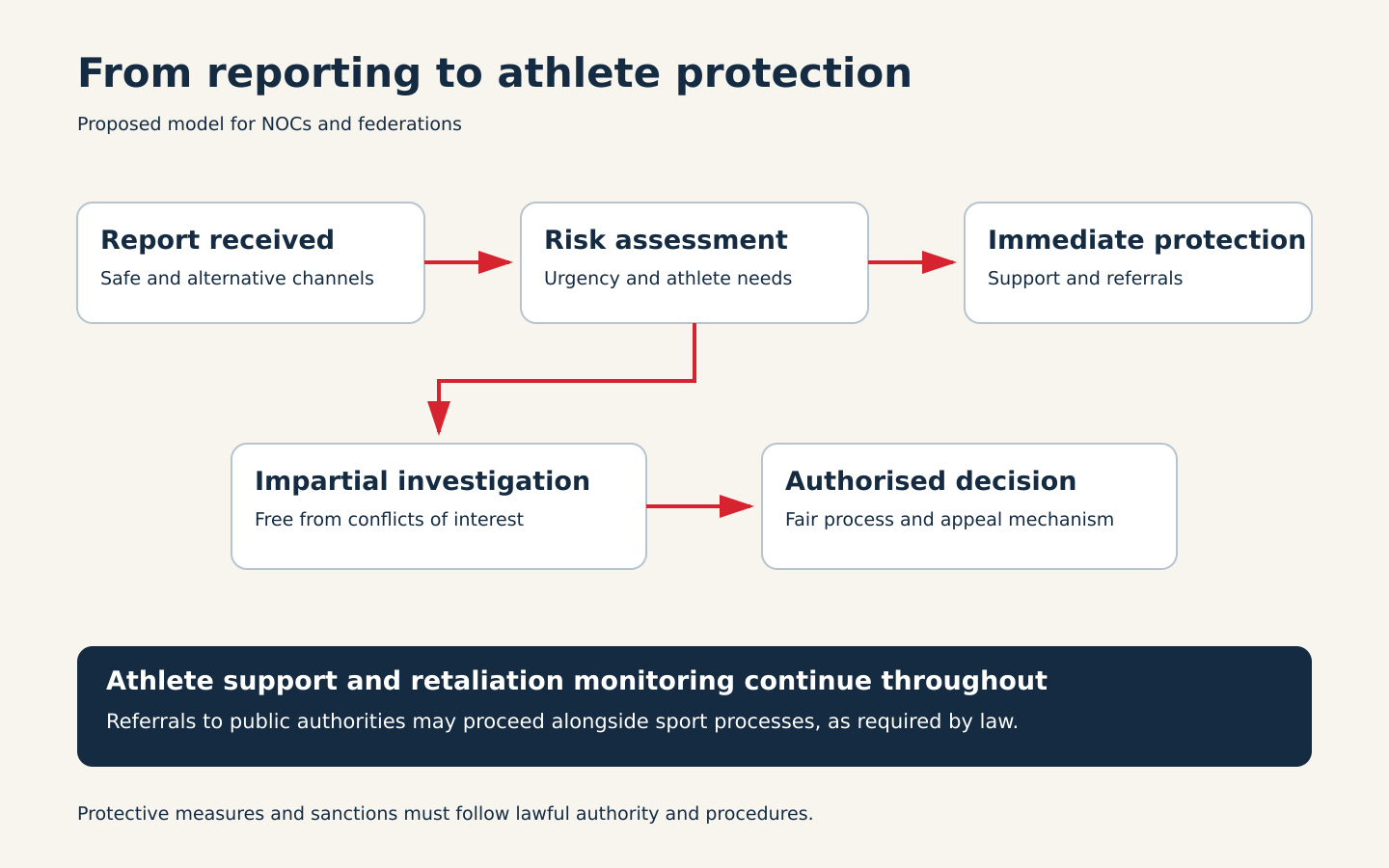
Proposed model. This diagram is not an approved official NOC Indonesia reporting pathway.
In the explanation provided by NOC Indonesia’s Safeguarding Officer, the taskforce offers multidisciplinary support while reporting pathways and cooperation across institutions are still being developed. The officer serves as the focal point for risk assessment and case triage, with referrals to independent investigators and medical, psychological, legal or statutory services as needed. Decisions on sanctions remain with the competent body. [9]
These roles need clear procedures. Who can take immediate protective action? How are reports involving senior leaders handled? Who ensures that a referral leads to action? IOC guidelines for NOCs and federations cover prevention, reporting, investigation, support, fair disciplinary processes, confidentiality, and athlete involvement in policy development. [10]
The experience in Bahrain and the Aichi–Nagoya assignment provide a foundation for strengthening Indonesia’s national system. The next task is to ensure that every federation has a responsible focal point, trusted reporting channels, and access to support services. Safeguarding succeeds when an athlete can ask for help, receive protection, and move forward without fear of retaliation. Athlete safety must become a measure of success in Indonesian sport.
Sources
FPTI, 4 March 2026, New management and athlete protection commitments for the national training camp
Ministry of Youth and Sports, 21 August 2026, Former climbing head coach named a suspect
Ministry of Youth and Sports, 11 March 2026, Kickboxing athlete discloses alleged sexual violence
Explanation from NOC Indonesia’s Safeguarding Officer on the taskforce and case handling
IOC Guidelines for IFs and NOCs, sections 2.1–2.12, IOC document hosted by the ICC
FACTUAL NOTES
The Aichi–Nagoya assignment announcement establishes capacity and mandate, not evaluated outcomes.
The climbing suspect/prosecutorial status is attributed to the ministry’s statement of 21 August 2026, not a court conviction.
NOC’s verified contribution concerning kickboxing is the development of safeguarding procedures, not a claim of direct investigation.
The taskforce explanation also draws on the officer’s statement supplied for the article.